
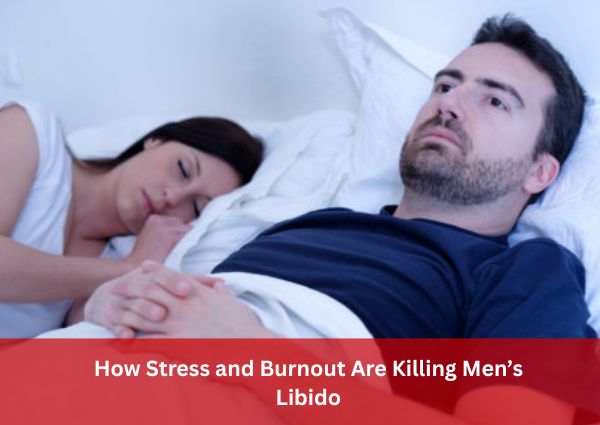
Life today rarely slows down. Work deadlines, family responsibilities, money worries, constant phone notifications, and lack of rest have become part of daily routine. While stress feels “normal” now, its impact on men’s health—especially sexual health—is anything but normal.
Many men quietly notice a drop in their sexual desire. They feel less interested, less energetic, and less confident—but brush it off, assuming it’s just tiredness or age. The truth is, ongoing stress and burnout can deeply affect libido, often without men realizing what’s really happening.
Libido Is a Reflection of Overall Health
Libido isn’t just about sex. It reflects how relaxed, confident, and balanced a person feels. When the mind is constantly racing and the body is exhausted, desire naturally fades.
A healthy sex drive depends on:
- Mental calm
- Emotional connection
- Good energy levels
- Balanced hormones
When stress takes over, these foundations start to crack.
What Stress Does to the Male Body
Stress puts the body into “fight or flight” mode. This is useful in short bursts—but when stress becomes constant, the body never truly relaxes.
Here’s what happens over time:
- Hormones take a hit
Stress increases cortisol, which lowers testosterone—the hormone responsible for desire, energy, and confidence. - The mind never switches off
A stressed brain finds it hard to stay present, making intimacy feel like another task instead of something enjoyable. - The body feels drained
Poor sleep and constant fatigue reduce interest in sex and physical closeness. - Performance anxiety creeps in
Stress can create fear of not performing well, which further lowers desire.
Slowly, stress steals both the interest and the enjoyment of intimacy.
Burnout: When Desire Completely Switches Off
Burnout goes beyond stress. It’s a state where the body and mind feel empty, numb, and exhausted. Men dealing with burnout often say they feel “nothing”—no excitement, no motivation, no interest in intimacy.
Common signs include:
- Zero sexual interest
- Constant tiredness
- Irritability or emotional distance
- Low confidence
- Feeling disconnected from a partner
In burnout mode, the body focuses only on survival—not pleasure or connection.
Mental Pressure vs Physical Pressure
Stress doesn’t come from just one place.
- Mental pressure includes work stress, financial worries, relationship conflicts, and emotional overload.
- Physical pressure includes lack of sleep, poor diet, smoking, alcohol, no exercise—or sometimes too much exercise.
Together, they quietly lower libido and overall vitality.
Signs It’s Time to Pay Attention
Many men wait too long, hoping things will fix themselves. But some signs shouldn’t be ignored:
- A long-term drop in sexual desire
- Stress-related erection issues
- Low energy and motivation
- Mood swings or anxiety
- Feeling distant from your partner
These are not signs of failure. They are signals that your body needs care.
Getting Libido Back Starts with Reducing Stress
The good news? Stress-related libido issues are very common—and very manageable.
What helps:
- Learning to slow down mentally
- Improving sleep quality
- Eating and moving better
- Addressing emotional pressure
- Checking hormone levels when needed
Quick fixes and random supplements rarely work. Real recovery comes from understanding what your body is going through.
Stress and burnout are silently affecting men’s libido more than ever before. Losing sexual desire doesn’t mean something is “wrong” with you—it means your body and mind are overloaded. Sexual health is closely tied to mental peace, energy, and emotional balance.
At Lal Clinic, , men are supported with understanding, privacy, and personalized care that focuses on restoring not just libido, but confidence, balance, and overall well-being.
Taking care of stress today can help you feel like yourself again—physically, emotionally, and intimately.